Mold Inspection Nashville, Moisture First, Not Guesswork
A stain on the ceiling is a symptom, not a diagnosis. Mold inspection Nashville homeowners actually need is a moisture investigation: where the growth is, how far the damp has spread, and what is feeding it. This page walks through what a proper inspection covers, what the written report should show, and how this service connects you with independent local providers who do the work.
- Moisture meter mapping
- Written report, not a sales pitch
- Crawl space and HVAC checked
- Independent local providers
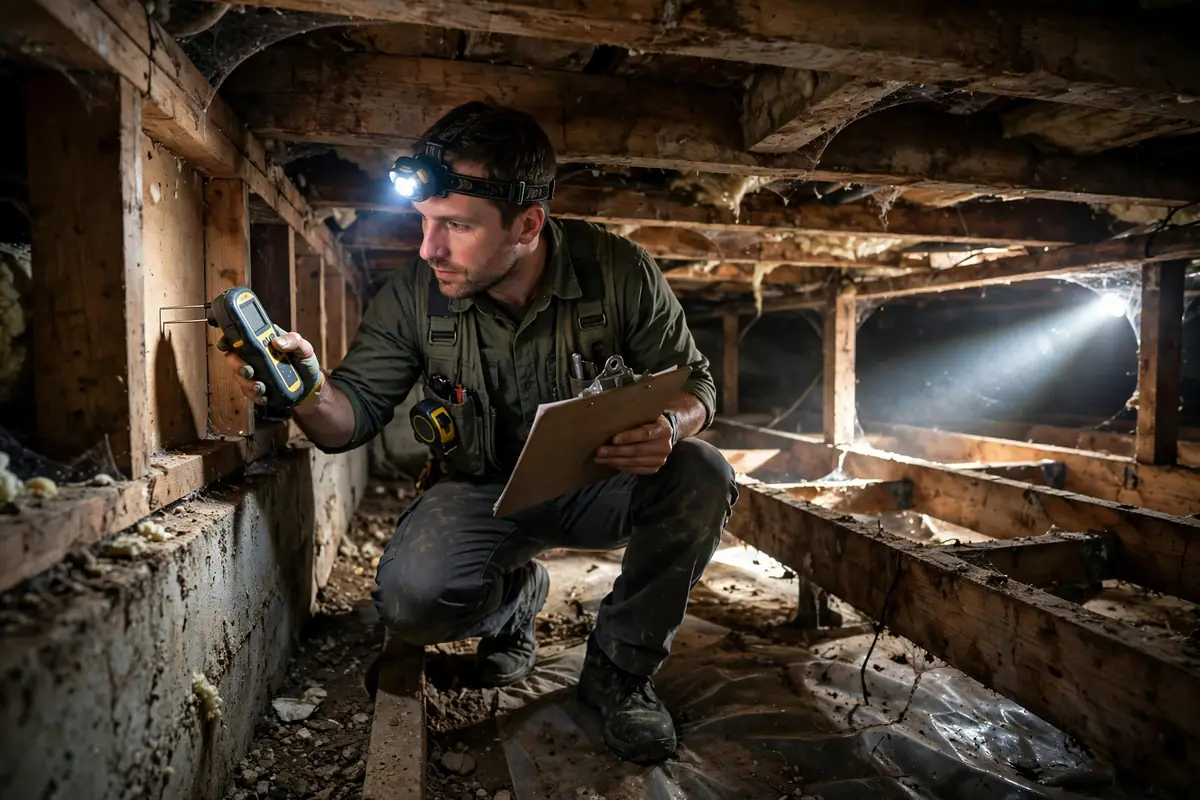
Mold inspection Nashville: what the visit actually covers
A proper mold inspection in Nashville is a moisture investigation, not a glance at the stain. The inspector maps damp materials with a meter, checks the crawl space, attic and HVAC, and tells you where the water is coming from. You get a written report that separates what needs removal from what only needs drying.
A mold inspector in Nashville works a particular set of hiding places. The postwar brick ranches of Madison, Donelson and Antioch sit on vented crawl spaces that pull humid air under the living rooms for most of the warm season, with average humidity around 70 percent and about 49 inches of rain a year on clay soil. Growth on the joists down there can run for years before a musty smell reaches the first floor. Bellevue and the Mill Creek corridor carry the legacy of the May 2010 Cumberland River flood, and older homes in East Nashville and Germantown add a century of plumbing repairs, additions and patched roofs.
That is why a Nashville mold inspection starts with the building, not the stain. The visible patch in the bathroom might trace to a failed toilet seal, a condensate line dripping in the crawl space, or a dryer venting under the house since before you bought it. Treat only the patch and the mold returns, which is the single most common complaint homeowners bring to forums. The inspection exists to find the source first, so the removal scope, if one is needed at all, is priced on facts.
What a proper inspection covers
Room by room visual survey
Every room, closet and cupboard is checked for growth, staining and odor, including the quiet corners: behind doors, under sinks, around tubs and showers, and along exterior walls where condensation settles in winter.
Moisture meter mapping
Pin and pinless meters read the damp inside drywall, flooring and framing, and the readings are mapped by location. This is what separates a surface stain from a wall that is wet to the studs, and it sets the honest size of any removal.
Crawl space check
Under the house is where Nashville mold lives. The inspector looks for growth on joists and subfloor, standing water, fallen insulation, a torn or missing vapor barrier, and plumbing or HVAC condensate dripping onto soil that never dries.
Attic, where it is accessible
A safe, accessible attic gets a look for roof leaks, bathroom fans venting into the space instead of outside, and growth on the underside of the roof deck. Those fan mistakes are a classic source of attic mold that no amount of bathroom cleaning fixes.
HVAC and humidity
The air handler, drip pan, condensate line and accessible ductwork are checked, along with the home's indoor humidity. A system that leaves the house clammy all summer feeds growth in places you will never see until the inspection finds them.
Source tracing
Every finding is tied back to a water source: a plumbing leak, a roof or flashing failure, grading that pushes rain toward the foundation, or plain condensation. No source, no lasting fix, so this step is the point of the whole visit.
An inspection is not a test
People often search mold inspection and testing Nashville in one breath, as if they were one service. They are not. The inspection is the detective work: a trained person in your home, measuring moisture and following the water. Testing is laboratory work: air or surface samples sent away to name the mold genus and compare indoor spore counts with an outdoor baseline.
Most homes need the inspection first and the test only sometimes. If growth is visible and the source is clear, a lab result rarely changes what has to happen next. Testing earns its place when a question is still open after the inspection: a musty smell with nothing visible, a health conversation already under way with a doctor, a dispute between buyer and seller, or proof after a removal job that the home is clean. Our mold testing in Nashville page explains the lab side, including what a report can and cannot tell you.
- The inspection answers where and why. Where the growth is, how far the moisture has spread, and what is causing it. That is the information a removal scope is priced from.
- The test answers what. Which genus of mold is present and whether indoor counts look raised against outdoors. It does not find hidden moisture and it does not plan the job.
- Order matters. Testing before inspecting is paying for a lab answer to a question nobody has properly asked yet. Inspect first, then test only what the inspection cannot settle.
What the written report should show
- Photos of every finding, labeled by room and location.
- Moisture readings by location, not a general note that things felt damp.
- The likely water source for each area of growth, stated plainly.
- A scope split into three parts: remove now, dry and monitor, and leave alone.
- A straight answer on whether lab testing would change any decision, and why.
- What happens if you do nothing, so the choice is yours with open eyes.
Inspections for buyers, sellers and renters
A large share of Nashville mold inspection work happens around a transaction. A buyer's general home inspector flags a dark patch in the crawl space, and the deal stalls until someone qualified says what it is and what fixing it costs. A dedicated mold inspection at that point does two things a general inspection cannot: it measures how far the moisture has gone, and it produces a report a remediation quote can be priced from, so the buyer can negotiate with a number instead of a fear. Most findings turn out to be a fixable source and a bounded job, which is why the standing advice is to price the problem before deciding whether to walk away.
Sellers use the same report the other way, to show a past problem was found, fixed at the source and documented. Renters use it as evidence: a dated, written record with photos is what turns a phone argument with a landlord into a repair, and what a housing inspector or health official will ask to see first. Whatever side of the table you sit on, the value is the same: findings in writing, from someone who measured instead of guessed. Read how the removal side works on our mold removal in Nashville page, and the full service picture on the mold remediation Nashville homepage.
The honest truth about free mold inspections in Nashville
Type free mold inspection Nashville into a search bar and the top results promise a visit at no charge. Before you book one, it helps to know what that product usually is, and what it is not.
What free usually includes
A walkthrough of the rooms you are worried about, a look at visible growth, a flashlight in the crawl space if it is easy to reach, and a verbal opinion that ends in a quote for removal work. That has real value as a first look, as long as you know it is also a sales visit.
What free usually excludes
A written moisture map you can keep and shop with. Lab samples, which cost the provider money at the lab. Time in the attic or a tight crawl space. And independence: the visit is paid for by the removal job it is meant to sell.
None of this makes a free inspection a trick. It makes it a specific product with a specific limit, and the limit matters most when the finding is big. Homeowners comparing quotes for the same house have been handed numbers thousands of dollars apart, and the difference was scope nobody wrote down. If the person who inspects also sells the cure, get the findings in writing anyway, then price the same written scope with a second company before you sign anything.
One more thing, plainly: providers set their own terms. Some offer free visual inspections, others charge for a full diagnostic visit and credit it against the work. This site does not promise a free inspection on anyone's behalf. When you book through a provider, confirm at booking whether the visit is free, what it covers, and whether you will receive the report in writing. A provider who answers those questions clearly is telling you something good about the rest of the job.
Who may do this work in Tennessee
Tennessee has no standalone mold license, which surprises people and explains why the market is uneven. Larger mold jobs fall under the state's contractor licensing instead. Work above $25,000 requires a contractor license carrying the S-Mold designation, and work from $3,000 to $24,999 falls under a home improvement license. You can check any provider's license status yourself at verify.tn.gov before they start, and two minutes there is basic due diligence before any mold inspection Nashville TN homeowners book.
The working standard a competent scope should follow is the ANSI/IICRC S520, the industry standard for professional mold remediation: containment, source correction, removal of growth and cleaning verified at the end. When you compare quotes, asking which standard the work follows and whether the license fits the size of your job separates the careful operators from the rest faster than any review page. Before price even enters it, see the published local ranges on our mold remediation cost guide so you know the shape of a fair number.
Common questions about mold inspections
How much does a mold inspection cost in Nashville?
It depends on what the visit includes, and that is the honest answer. Some Nashville providers offer a free visual inspection that ends in a removal quote. A paid inspection with moisture meter mapping, photos and a written report costs more, and lab sampling is priced on top when it is needed. Ask what the visit includes before you book, and compare like with like: a free look and a written diagnostic report are different products.
What is the difference between mold inspection and mold testing?
An inspection is a person investigating your home: looking, measuring moisture, and finding where the water comes from. Testing is lab work: air or surface samples that name the mold genus and compare indoor counts with outdoors. Most homes need the inspection first. Testing is added when a question is still open afterward, such as clearance after a removal job or a musty smell with no visible source. Our testing page explains the lab side in full.
Should the company that inspects also do the removal?
It can, but know the incentive. An inspector who also sells removal is paid more when the job is bigger, and homeowners in forums repeat the same advice: ask someone besides the remediation company. A clean pattern is an inspection with a written report you own, then two removal quotes priced against that same report. If the inspecting company bids too, their number sits next to a competitor's, which keeps everyone honest.
Mold showed up on our home buying inspection. Should we walk away?
Not automatically. Mold is a moisture problem with a price tag, and most Nashville findings come down to a fixable source: a slow leak, a damp crawl space, a bathroom fan venting into the attic. Get a real remediation quote before you decide, priced from a proper inspection, and negotiate with that number in hand. Walking away makes sense when the source is structural, the area is large, or the seller will not move on price.
We rent. Can we ask for a mold inspection?
Yes, and do it in writing. Send your landlord a dated notice with photos of what you can see and where, and keep a copy. That paper trail is what housing inspectors and health officials ask for later if nothing gets fixed. Tennessee landlords carry a general duty to keep rentals habitable, and a documented inspection, yours or theirs, is usually what turns an argument into a repair.
What do we actually get at the end of an inspection?
A written report you can hand to anyone: photos of each finding, moisture readings by location, the likely water source, and a scope split into what needs removal now, what needs drying and monitoring, and what can wait. It should also say whether lab testing would change any decision, and why. If the visit ends with only a verbal opinion and a single price, you got a sales call, not an inspection.
Found mold, or a smell you cannot place?
Start with the moisture, not the stain. Reach out now and get connected with a local provider who will inspect first, put the findings in writing, and price only what the report supports. If you already know the growth needs to come out, the mold removal page covers that side, and the mold remediation Nashville homepage covers the rest of the service.
Get Help Now